Zero-Day Threat Brief: State-Sponsored Actor Exploits Cisco ASA & FTD Vulnerabilities

Date
Authors
Rodrigo Contarino
Follow Us


Executive Summary
In September 2025, Cisco disclosed three critical vulnerabilities impacting Cisco Adaptive Security Appliance (ASA) and Firepower Threat Defense (FTD) platforms. Two of these vulnerabilities — CVE-2025-20333 and CVE-2025-20362 — were actively exploited in the wild by a sophisticated, likely nation-state actor known as UAT4356 (also tracked as Storm-1849), the same group responsible for the ArcaneDoor campaign in 2024.
These attacks target perimeter security devices — firewalls and VPN gateways — enabling stealthy access into government and high-value enterprise networks. The campaign uses advanced malware, including a persistent bootkit (“RayInitiator”) and a memory-resident shellcode loader (“LINE VIPER”), to bypass traditional defenses and maintain long-term access.
Timeline of Events
- September 25, 2025: Cisco publishes advisories for CVE-2025-20333, CVE-2025-20362, and CVE-2025-20363.
- Same Day: CISA issues Emergency Directive 25-03 mandating patching of federal systems.
- UK NCSC: Releases malware analysis report detailing RayInitiator and LINE VIPER.
- Tenable, Palo Alto Networks, and others: Release threat advisories supporting Cisco’s findings.
Vulnerabilities Overview
| CVE | Description | CVSS | Exploited | |||||||||
| CVE-2025-20333 | Remote code execution (RCE) vulnerability in VPN web server of Cisco ASA/FTD | 9.9 (Critical) | Yes | |||||||||
| CVE-2025-20362 | Unauthorized access to restricted VPN endpoints | 6.7 (Medium) | Yes | |||||||||
| CVE-2025-20363 | RCE in web services affecting ASA, FTD, IOS, IOS XE, IOS XR | 9.0 (Critical) | No |
Two of the vulnerabilities (20333 and 20362) were used in combination to gain control of ASA/FTD appliances exposed to the internet. Cisco confirmed both were zero-day exploits at the time of detection.
Threat Actor & Malware Profile
Actor: UAT4356 / Storm‑1849
- Previously linked to ArcaneDoor (April 2024)
- Focused on stealth, persistence, and data exfiltration
- Targeting government agencies and high-value organizations
RayInitiator (Bootkit):
- Multi-stage GRUB-style bootloader
- Persists across reboots and firmware updates on devices lacking secure boot
- Launches additional payloads in early boot stages
LINE VIPER (Shellcode Loader):
- Memory-resident payload, never written to disk
- Communicates with C2 over WebVPN HTTPS or ICMP
- Capable of deploying modular post-exploitation tooling
Patch Mapping (Examples)
Cisco has published fixed versions for actively supported software branches. Older releases may require full version migration.
ASA Fixed Versions
- 9.16 → 9.16.4.85
- 9.18 → 9.18.4.67
- 9.19 → 9.19.1.42
- 9.20 → 9.20.4.10
- 9.22 → 9.22.2.14
- 9.23 → 9.23.1.19
ASA 9.17 is not patched — migration required.
FTD Fixed Versions
- 7.0 → 7.0.8.1
- 7.2 → 7.2.10.2
- 7.4 → 7.4.2.4
- 7.6 → 7.6.2.1
- 7.7 → 7.7.10.1
FTD 7.1 and 7.3 are not patched — migration required.
Immediate Response Checklist
1. Patch Affected Devices
- Upgrade ASA and FTD software to Cisco’s fixed versions.
- If on unsupported versions, initiate migration immediately.
2. Review VPN and Web Service Exposure
- Disable WebVPN where possible.
- Restrict external access until devices are confirmed clean.
3. Confirm Logging and Export Telemetry
- Validate logs weren’t disabled or tampered with.
- Export all available logs to external systems.
4. Hunt for Known Indicators of Compromise
- Search for signs of RayInitiator or LINE VIPER.
- Monitor WebVPN and ICMP activity for potential C2 channels.
5. Perform a Compromise Assessment
- Analyze boot-level artifacts on ASA 5500-X and similar models.
- Capture memory and configs for forensic review.
What Organizations Should Know
Lifecycle of a Zero-Day
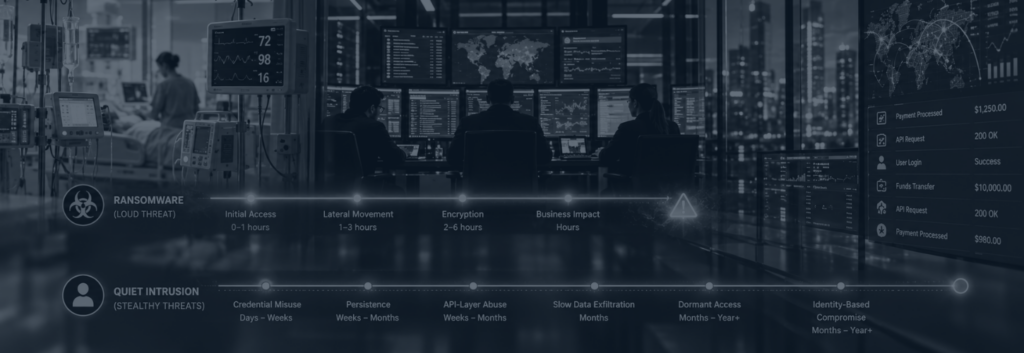
State-sponsored actors often exploit zero-days months before detection. Once public, these exploits are quickly repurposed by cybercriminals. The result is a two-stage threat:
- Targeted, stealthy intrusions (by nation-state actors)
- Mass exploitation (by cybercriminals using retooled PoCs)
Patch-or-perish scenarios emerge — where unpatched organizations become low-hanging fruit for automated exploit kits.